Do you need a ticket for the Jewish Museum Berlin, and what does it actually cost?
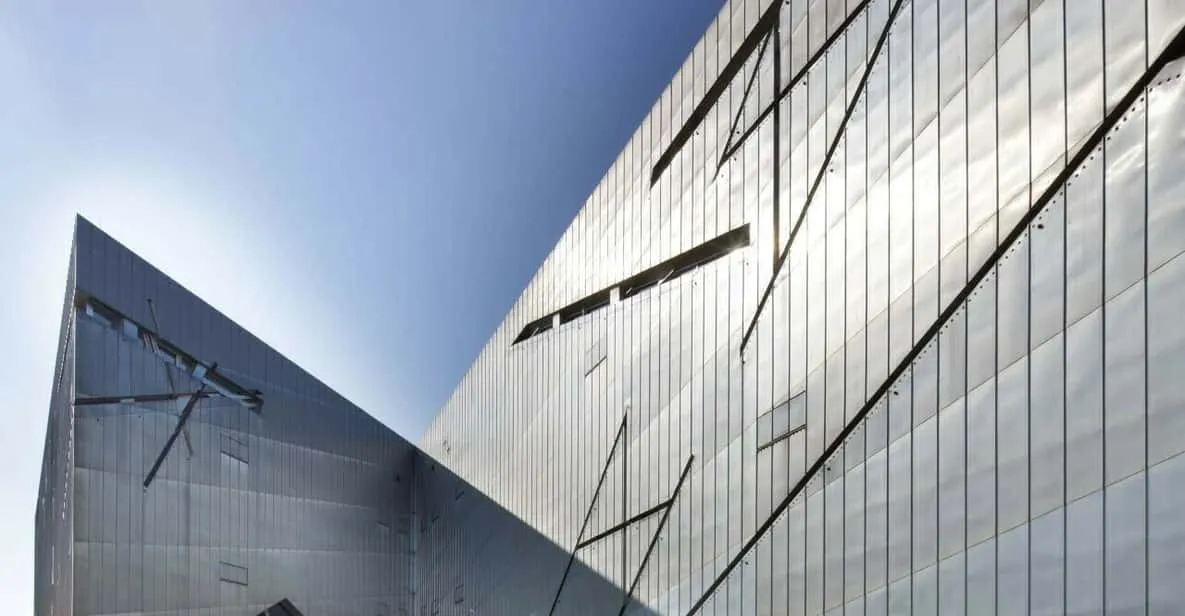
The Jüdisches Museum Berlin stands at Lindenstraße 9 to 14 in Kreuzberg, where Daniel Libeskind's zinc zigzag of 2001 is grafted onto a baroque Prussian courthouse of 1735. Its core exhibition runs from medieval Ashkenaz to Jewish life in Germany after 1945, and it costs nothing to enter. Two things decide most visits: that free admission, and the fact that the museum is shut every Monday. This guide covers both, plus what the building itself asks of you and how long to allow.
About This Experience
Lindenstraße 9 to 14, Kreuzberg, 10969 Berlin. The Libeskind building and the old courthouse share one site; ANOHA, the children's world, sits across the road in the former flower market hall.
U1, U3 or U6 to Hallesches Tor, about five minutes on foot, or U6 to Kochstraße. Buses 248, M29 and M41 stop nearby. Everything is inside fare zone AB, so a standard Berlin AB single ticket covers the trip. Street parking around Lindenstraße is scarce, so public transport is the sensible choice.
Tuesday to Sunday 10:00 to 18:00, last admission 17:00. Closed every Monday, on Jewish high holidays and on 24 December. For 2026 that means Rosh Hashanah on 12 and 13 September, Yom Kippur on 21 September, and Christmas Eve.
The core exhibition is free of charge for everyone. Temporary exhibitions in the Old Building cost 10 euros for adults and 4 euros concession for students, unemployed visitors and holders of a severe disability pass, with ID. Under 18s enter free, as do members and journalists. ANOHA is free but carries a 3 euro online booking fee.
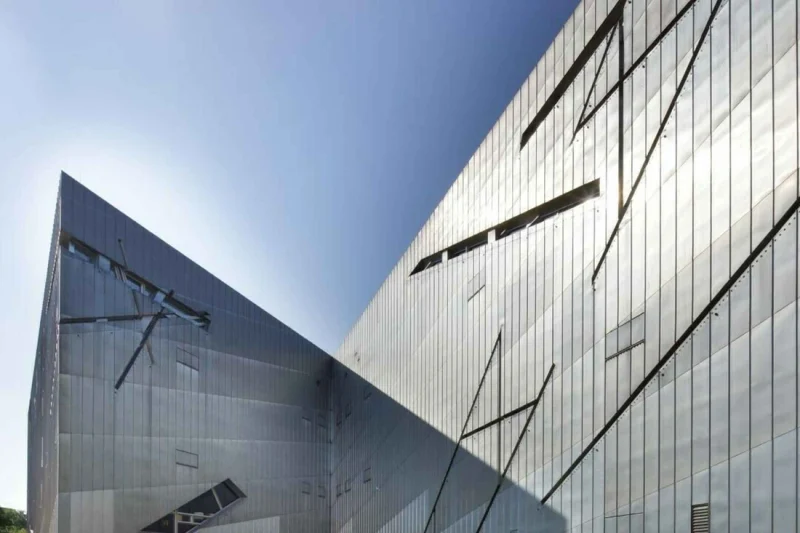
Libeskind's zinc-clad zigzag, slashed with window lines that ignore the floors behind them, joined underground to the 1735 courthouse. Three axes below ground carry the argument before a single object does.
The Holocaust Tower, the Garden of Exile, Menashe Kadishman's iron faces in the Memory Void, and a core exhibition covering roughly 1,700 years of Jewish life in German lands.
Check Live Availability & Prices
Timed slots are released for each opening day and the museum is closed on Mondays, so check the calendar before you plan the day. Live dates are below.
Which Jewish Museum Berlin Ticket to Pick
There is really only one thing to book, and it is listed at Free because that is what it costs. The core exhibition, the three underground axes, the Holocaust Tower, the Memory Void and the Garden of Exile are all free of charge for every visitor, with no age or residency condition attached. What the booking buys is a timed entry slot, which lets you go to the reserved lane at the security check instead of standing in the walk-up queue.
On a wet Saturday in August that difference is worth twenty minutes or more; on a Wednesday in February it may be worth nothing at all. It is rated 4.5 from 9,327 travelers.
The free slot suits anyone coming for the building and the core exhibition, which is most people. Allow three hours as a floor. Visitors regularly report four or five and still leaving sections unseen, partly because the axes and the garden take longer than they look and partly because the core exhibition upstairs is dense: medieval Ashkenaz, Enlightenment Berlin, emancipation, the Weimar years, persecution and murder, and then Jewish life in Germany after 1945.
Teenagers upward manage it. Younger children are better served by ANOHA across the road, which is a separate building with its own entry.
What the free ticket does not cover is the temporary exhibitions in the Old Building, which are 10 euros for adults and 4 euros concession and are paid for separately at the museum. It also does not include a guide, and no guiding is bundled with it; the museum's own texts do the work instead. If you are fitting this into a wider week in the city, the Kreuzberg location puts it a long way from Museum Island, so it works better as its own half day than as a stop between other collections, and our guide to Berlin's museums sets out which combinations actually sit near each other.
Reserving Your Slot
One booking covers the visit. Entry to the core exhibition is free; the reservation simply holds a time.
from Free Jewish Museum Berlin Entrance Ticket
Libeskind's zig-zag building is an argument before you reach a single exhibit, with its Holocaust Tower, Garden of Exile and the iron faces underfoot in the Memory Void…
- Free core exhibition
- Libeskind's Holocaust Tower
- 1,700 years of Jewish life
What You'll See
The visit starts below ground, on three intersecting axes named Continuity, Emigration and Holocaust, which you cross before reaching any exhibition object. The Axis of the Holocaust ends at the Holocaust Tower: an unheated bare concrete shaft, lit by a single narrow slit high above, with the door shut behind you. Nobody is obliged to go in.
The Axis of Emigration leads out to the Garden of Exile, 49 concrete steles planted with olive willow on ground that tilts underfoot so that nobody walks it comfortably. Inside the Memory Void lies Shalechet, or Fallen Leaves, by Menashe Kadishman: more than 10,000 open-mouthed iron faces cut from steel plate and laid across the floor. Visitors are invited to walk on them, and the clanking carries up the whole height of the shaft.
Upstairs the core exhibition takes over, and it is not a Holocaust museum. It follows Jewish life in German-speaking lands from medieval Ashkenaz through the Enlightenment in Berlin, legal emancipation in the nineteenth century, the Weimar years, then persecution and murder, then the small and complicated story of Jewish life in Germany after 1945. The glass-covered courtyard of the old courthouse, the Glashof, is a Libeskind addition of 2007 and now holds the cafe and the event space.
Across the road, ANOHA is the children's world for ages 3 to 10, built around a large wooden ark.
How a Visit Flows
-
10:00
Security and cloakroom
Airport-style screening at the entrance, with photo ID requested, so carry a passport, national ID card or driving licence. Coats, umbrellas, large bags and backpacks go into the cloakroom first, which adds time when it is busy.
-
10:20
The three axes
Down into the Libeskind basement and along Continuity, Emigration and Holocaust. Read the display cases set into the floor as you go; they hold objects left by people whose paths ended in one direction or the other.
-
10:45
Holocaust Tower and Garden of Exile
The tower takes a few minutes and is cold, dark and enclosed by design. The garden is outdoors and the sloping ground is deliberately unsteady, so give it proper shoes and a little patience.
-
11:15
The Memory Void
Walk across Kadishman's iron faces rather than around them. Wait for a moment when several people are crossing at once to hear the sound the piece was made for.
-
11:45
Core exhibition
Two floors, roughly 1,700 years, and the longest part of the day. Most people need two hours here and many need more.
-
14:00
Glashof and out
The cafe in the glass courtyard works better as a break partway through than as a stop at the end. Hallesches Tor is five minutes away on foot when you are done.
Know Before You Go
Not suitable for
- Young children, who are better served by ANOHA across the road than by the core exhibition
- Anyone who finds cold, dark, enclosed spaces distressing; the Holocaust Tower is all three by design and can be skipped
- A quick half-hour stop, since three hours is the realistic minimum
What to bring
- Photo ID, since a passport, national ID card or driving licence is requested at the security check
- Shoes with a proper sole for the uneven ground in the Garden of Exile
- A jacket, because the garden is open to the weather and the tower is unheated
- Your booking confirmation for the reserved timed slot
Not allowed
- Large bags and backpacks in the exhibition rooms; they go in the cloakroom
- Coats and umbrellas beyond the cloakroom
- Entry on a Monday, on Jewish high holidays or on 24 December, when the museum is closed
Insider Tips
Six things worth knowing before you set out.
- Reserve a timed slot online even though entry costs nothing, because the walk-up queue at the security check is the only real bottleneck here
- Take the axes, the Holocaust Tower and the Garden of Exile before the core exhibition, so the architecture sets the terms rather than arriving as an afterthought
- Block out three hours as a minimum; plenty of visitors spend four or five and still miss sections
- Walk on the Shalechet faces instead of stepping around them, which is what Kadishman intended, and wait for several people to be crossing at once
- Use the cafe in the glass courtyard as a break halfway through rather than a stop at the end
- Do not skip the garden because it looks like a side yard; it is the part visitors most often say they remember
Where You're Headed
Jewish Museum Berlin FAQ
Is the Jewish Museum Berlin free to enter?
Yes. The core exhibition is free of charge for everyone, and so are the Libeskind axes, the Holocaust Tower, the Memory Void and the Garden of Exile. The online reservation is listed at Free for the same reason: it holds a timed slot rather than selling admission. Temporary exhibitions in the Old Building are separate and cost 10 euros for adults, 4 euros concession.
What day is the Jewish Museum Berlin closed?
Monday, every week. It also closes on Jewish high holidays and on 24 December. In 2026 that means 12 and 13 September for Rosh Hashanah, 21 September for Yom Kippur, and Christmas Eve.
How long do you need at the Jewish Museum Berlin?
Three hours is the working minimum for the core exhibition plus the axes and the garden. Four to five hours is common, and people still leave sections unseen. Opening is 10:00 to 18:00 Tuesday to Sunday, with last admission at 17:00, so a late-afternoon arrival will not be enough.
Do you need to book Jewish Museum Berlin tickets in advance?
It is not required, but a free timed slot booked online lets you avoid the walk-up queue at the security screening, which is the slowest point of the visit at busy times. In quiet weeks you can simply turn up.
Which U-Bahn station is closest to the Jewish Museum Berlin?
Hallesches Tor, served by the U1, U3 and U6, is about five minutes on foot. Kochstraße on the U6 also works. Buses 248, M29 and M41 stop nearby, and the whole trip is inside fare zone AB.
Is there a security check at the Jewish Museum Berlin?
Yes, airport-style screening at the entrance, and photo ID is requested, so bring a passport, national ID card or driving licence. Coats, umbrellas, large bags and backpacks go into the cloakroom before you go through.
Is the Jewish Museum Berlin suitable for children?
The main museum suits teenagers upward. For ages 3 to 10 there is ANOHA, the children's world built around a large wooden ark in the former flower market hall across the road. It is free, with a 3 euro online booking fee, and has its own entrance.
What is the Holocaust Tower at the Jewish Museum Berlin?
A bare concrete shaft at the end of the Axis of the Holocaust, unheated, lit only by a narrow slit high above, with the door closed behind you. It holds no objects and no text. Some visitors find it genuinely distressing, and there is no obligation to enter.
What Visitors Say
We went down the axes first, as recommended, and it changed how the rest of the day read. The Holocaust Tower took maybe four minutes and I have thought about it since. Three hours was not enough for the exhibition upstairs.
Worth knowing that the security check has a queue and that ID is asked for. We had booked a slot, which helped. The garden is uneven underfoot on purpose and my mother found it hard going in the rain.
I had expected only the Nazi period and found instead a long account of Jewish life in German lands going back centuries, with the postwar rooms among the more difficult. The iron faces are best heard when a group is crossing.